A garage website can look smart and still make the team do unnecessary work. If the contact form asks only for a name, telephone number and message, the workshop may spend the next call finding out which vehicle the customer owns and what they want done.
Good garage website design should make it easy for local motorists to see what the garage does, decide whether it suits their needs and send an enquiry that is actually useful. The design matters. So does what happens after someone presses Send.
What should an independent garage website achieve?
Most visitors want a practical answer. Can the garage do the job? Where is it? When can somebody look at the car? How do they request help?
A useful site should explain services clearly, show the relevant location and contact details, make mobile enquiries straightforward and collect enough information to route the request to the right person.
It should also distinguish an enquiry from a confirmed appointment. A driver should know what will happen after submitting the form.
Start the enquiry with the registration number
A vehicle registration field is useful for service enquiries because it can reduce manual entry and help confirm which vehicle the customer means. A supported registration lookup can return identification details such as make, model, year and fuel type where records exist.
Depending on the service, MOT status, expiry, test history, recorded mileage, advisories and tax status can also help the garage understand the enquiry.
Ask the customer to confirm that the identified vehicle is correct. Provide a manual fallback when a lookup does not return a usable result.
Seven useful elements of garage website design
1. Services that match what the workshop actually offers
Explain MOTs, servicing, diagnostics, repairs and specialist work in terms customers recognise. Do not advertise a service the garage cannot routinely provide. Give specialist offerings their own clear explanation where it helps a customer make a decision.
2. Local contact and service area information
Make the address, opening hours, service area and appropriate contact routes easy to find. A mobile mechanic needs to explain where they travel; a workshop needs to help customers find the premises.
3. A mobile-friendly enquiry journey
Many visitors will be standing beside their car with a phone. Registration fields, service choices and contact buttons need to be easy to use without zooming or repeated typing.
4. Specific questions for the job
A diagnostic enquiry needs a description of symptoms and warning lights. A body repair enquiry may need photographs. An MOT repair enquiry may need confirmation of the work still outstanding. Use relevant questions without making every customer complete a lengthy form.
5. Clear expectations after submission
Explain whether the garage will call, email, provide an estimate or confirm availability. Avoid a ‘booking confirmed’ message if the workshop has only received an enquiry.
6. Trustworthy evidence
Use genuine workshop photographs, real team information and accurate details of equipment or specialisms. Show reviews only where they are genuine and correctly attributed.
7. Useful measurement
Measure completed enquiries, click-to-call actions and the quality of leads. A busy website is not necessarily producing work. Track which services generate enquiries that your team can actually take.
Plan the repair enquiry journey before choosing a website platform
Independent garage websites often start with a page builder and a contact form. A more useful starting point is the information your team needs to decide whether to accept a job. Map what happens from the moment somebody enters a registration to the point when the garage responds. Include the staff member who receives the request and the system they already use.
For a car repair enquiry, the practical minimum is usually the registration, the type of work, a brief description, contact details and a clear next step. A diagnostic enquiry might ask which warning light appeared and whether the engine starts. A body repair request may benefit from photographs where the chosen form supports them. Keep optional questions tied to the service rather than forcing every visitor through the same lengthy questionnaire.
Give the visitor a manual route when a registration lookup cannot identify the vehicle. Imported vehicles, recent plate changes and incomplete records need human confirmation. Display retrieved vehicle details for checking before submission. MOT advisories can prompt better questions, but an old advisory is not evidence that a fault remains or that work is authorised.
What to test on a garage website before launch
Take a real mobile phone and complete each important journey. Use a straightforward MOT enquiry, a complicated repair request and a vehicle that returns no useful lookup data. Check the result from the customer’s point of view and the garage’s inbox or account.
- Clarity: services, service area, opening hours and contact options are easy to find
- Form behaviour: labels are readable, errors explain the correction required and the form can be completed without unnecessary typing
- Handover: the team receives the registration, customer contact details and work description in a usable format
- Expectation: the confirmation explains who will respond and makes clear whether a booking has actually been accepted
- Recovery: an unavailable vehicle data service does not prevent the customer from sending a sensible manual enquiry
Test whether an enquiry still reaches the right staff member when the preferred contact is absent. A website that looks finished but sends leads to an unmonitored mailbox is a poor investment.
Make customer information and enquiry measurement part of the brief
Collect the personal information needed to respond to the request and explain how the garage will use it. The Information Commissioner’s Office guidance says privacy information should be supplied when a person provides their details, with easy access at the point of collection. Review who can access stored enquiries, how long records are kept and which suppliers process them.
Measure useful outcomes, such as submitted MOT enquiries, repair enquiries, calls from the site and jobs the garage actually accepts. Keep enquiry counts separate from confirmed bookings or completed paid work. Track failed submissions and obvious friction as well as successful submissions. Use real enquiries to decide which form questions to simplify or which services need their own landing page.
Choose the right level of garage website development
If the existing site is working well and the gap is incomplete vehicle enquiries, add the EasyWin WordPress form without replacing the whole website. The WordPress introductory setup offer applies where the current product page confirms it. For a suitable non-WordPress website, review the separate HTML form and test whether your platform allows the required embed.
If the garage needs a new website, several branches, custom pricing rules, integration with a CRM or an existing workshop platform, plan a separately scoped automotive website and API development project. Agree which features are ready-made, which require development and which receiving systems can actually accept data. A better enquiry journey is a measurable specification for that work.
WordPress garage websites: adding vehicle data without rebuilding the site
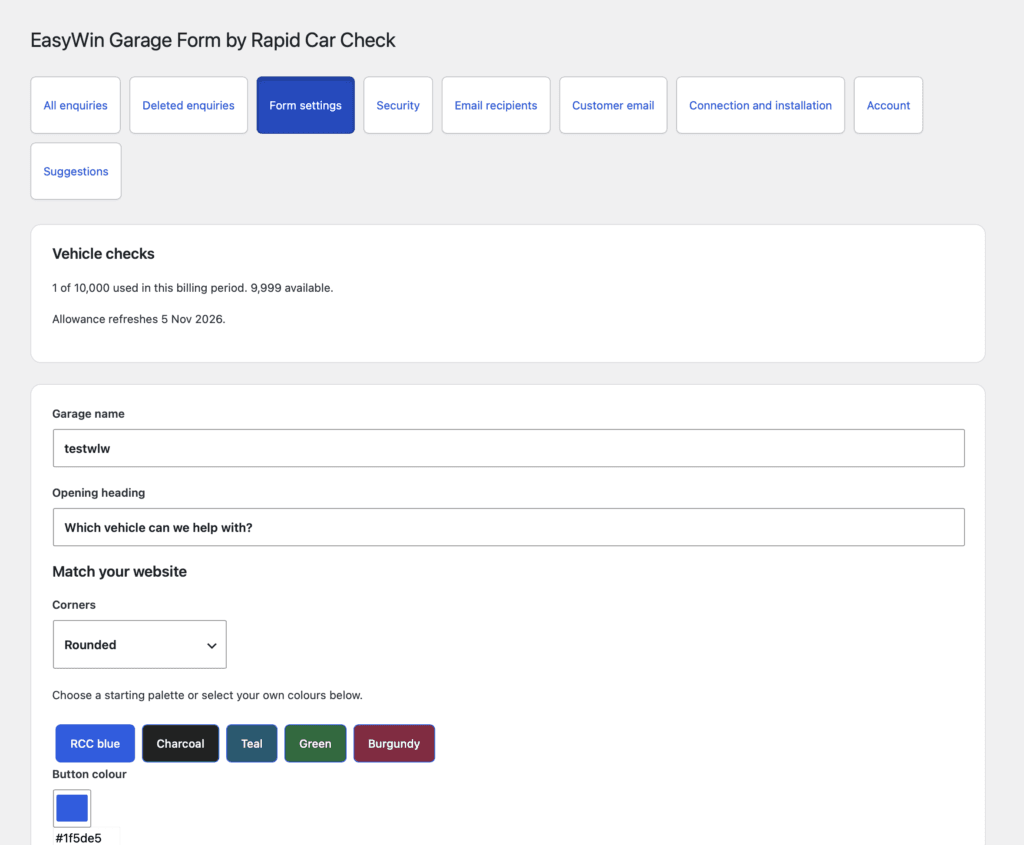
Garages with an existing WordPress site can add a vehicle-aware EasyWin enquiry form. The customer enters their registration, describes the work and provides their contact details. The enquiry arrives together with relevant vehicle information, MOT history and tax status and is saved in WordPress and the RCC garage account.
EasyWin offers colour and wording choices to help match the form to the existing site. Under the current introductory offer, the WordPress product includes free installation and setup. A new website design is a separate decision.
What about Wix, Squarespace or a custom website?
The EasyWin HTML Form is intended for websites that support the necessary custom HTML, JavaScript and embedded content. The form is hosted through RCC and enquiries are saved in the garage’s RCC account.
Website compatibility depends on the site’s subscription, security settings and available embed permissions. The HTML product includes self-installation guidance; assisted installation is quoted separately.
When does a garage need a custom booking or vehicle lookup integration?
Sometimes the business needs more than a ready-made enquiry form. A garage may want vehicle-based service prices, branch selection, existing form integration or a workflow that sends information into a CRM or appointment system.
Rapid Car Check’s WordPress vehicle forms and plugins service supports separately scoped integration work. The existing website form may be retained where its structure and supported connections allow it.
What should you ask a garage website designer?
- How will customers submit an MOT, service or repair enquiry on a mobile phone?
- Can the enquiry include a verified registration and appropriate vehicle data?
- How will a failed vehicle lookup be handled?
- Will the form confirm a booking or request that the garage contacts the customer?
- Who receives the enquiry and where is it stored?
- Can website submissions be measured without collecting unnecessary personal information?
- Can the garage change services, questions and contact details without rebuilding the page?
Related guides for garages
The next decisions are covered in garage booking systems versus enquiry forms and garage management software.
Make the website earn its place in the business
A design refresh can make a garage look better. A better enquiry process can give staff more useful information from the outset. Both are valuable when there is a clear reason to invest.
If your website already brings visitors but sends incomplete messages, test EasyWin for WordPress or its HTML counterpart. Start with the handover between customer and garage and improve the design around it.